4th edition · AI edition

Join us at the Forum of Innovative Medicine

International Interdisciplinary Forum of Innovative Medicine — one day on which clinicians, engineers, researchers and managers talk about artificial intelligence in medicine without jargon and without distance.

16 October 2026
starts at 9:00
Medical University of Silesia, Katowice

Admission is free. You will receive a confirmation of your registration by e-mail.

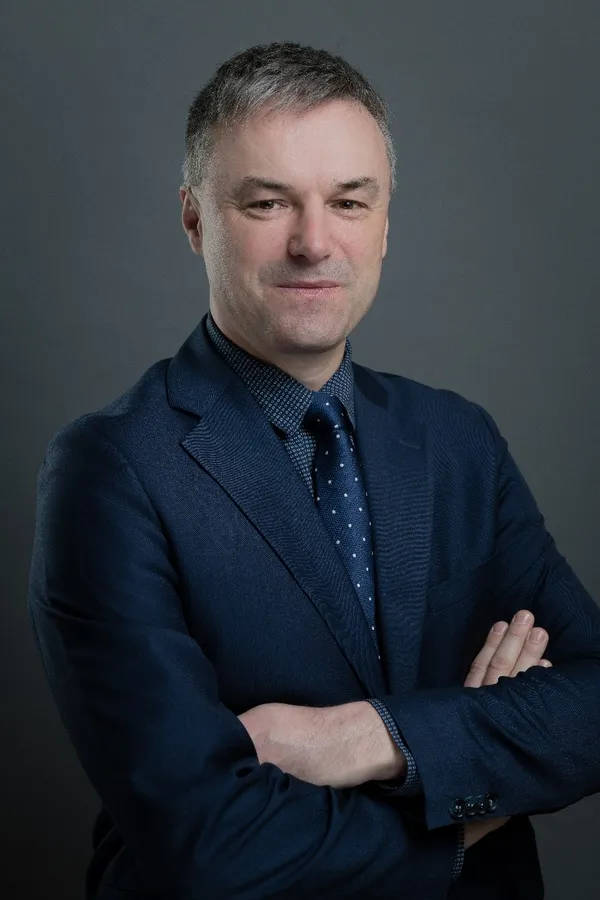
Prof. Tomasz Francuz, MD, PhD
Dean of the Faculty of Medical Sciences in Katowice,
Medical University of Silesia

Invitation

You are warmly invited to the Medical University of Silesia in Katowice

Dear Colleagues,

I would like to invite you to the fourth edition of the International Interdisciplinary Forum of Innovative Medicine. Artificial intelligence remains the leading theme — this time we ask not what is possible, but what already works at the patient's bedside and how AI can support medical education.

I2FIM is a space where clinicians, engineers, researchers and managers speak one language. I trust that on this day, too, the conversations in the corridors will matter as much as those in the lecture hall.

See you on 16 October.
Programme

International Interdisciplinary Forum of Innovative Medicine — the artificial intelligence edition

Date
16 October 2026
Start
9:00
Venue
Medical University of Silesia, Katowice
Programme as PDF
Opening

Forum opening

9:00–9:10
Prof. Tomasz Francuz, MD, PhD
Dean of the Faculty of Medical Sciences in Katowice, Medical University of Silesia
Session 1

From idea to implementation. How to deploy AI in healthcare?

9:10–10:00
4 × 10 min + 10 min discussion
  1. Przemysław Czuma
    Orthopaedic and trauma surgeon, MBA; PSSiM
    Artificial intelligence as a tool for making tools
  2. Agata Wijata, PhD
    Department of Medical Informatics and Artificial Intelligence, Faculty of Biomedical Engineering, Silesian University of Technology; Zabrze
    Topic to be announced
  3. Marzena Krawiec
    Digital transformation leader in healthcare; Katowice
    AI innovation in the organisation. Do clinicians and managers speak different languages about the same thing?
    AI deployments seen from the perspective of a hospital manager, and the language gap between clinicians and managers.
  4. Roman Bieda
    Attorney-at-law and patent attorney, lecturer at Kozminski University; Warsaw
    How to train AI under a lawyer's watchful eye?
    Selecting training data under Article 10 of the AI Act, its impact on model bias, and the legal consequences.
Session 2

AI in theory and practice, part 1

10:00–10:45
3 × 10–15 min + 10 min discussion
  1. Lee Hwee Kuan, PhD
    Senior Principal Scientist, Bioinformatics Institute, A*STAR; Singapore (15 min)
    Topic to be announced
  2. Daniel Ledwoń, PhD
    Faculty of Biomedical Engineering, Silesian University of Technology; Zabrze
    Towards Personalised Treatment of Retinal Diseases through AI-enabled Comprehensive Patient Assessment
  3. Andrzej Michnik, PhD
    Electronics engineer, Łukasiewicz Research Network — Krakow Institute of Technology; Rybnik
    How to talk to a small Bielik (a Polish LLM)?
    A small local generative model for Polish: the trade-off between responsiveness and answer quality.
Coffee break · 10:45–11:10
Session 3

AI in theory and practice, part 2

11:10–12:05
4 × 10–15 min + 10 min discussion
  1. Murat Bilici
    Surgeon and data scientist; Basel, Switzerland
    Teaching Machines to Read PubMed — All of It
    OKF (Open Knowledge Format) — an open knowledge format as the successor to classic RAG.
  2. Daria Hemmerling, PhD
    Department of Measurement and Electronics, AGH University of Krakow (15 min)
    Topic to be announced
  3. Mikołaj Basza, MD
    Physician, new technologies expert at the Silesian Medical Chamber; Katowice
    AI on call: practical applications in cardiology
  4. Marek Trojanowicz
    Chief Product Officer, BrainScan; Gdańsk
    From breakthrough invention to painstaking deployment. Why not all that glitters is AI?
    How hard the road from a good solution to real-world deployment is, and why the best inventions do not always win.
Panel

Artificial intelligence in education. How will AI change the face of universities?

12:05–12:45
Coffee break · 12:45–13:10
PSSiM session

Contributions from association members

13:10–14:00
4 × 10 min + 10 min discussion
  1. Marcin Szeliga
    Data scientist and machine learning trainer; Katowice
    How AI understands medical knowledge: from meaning to clinical decision support
    Embeddings, vector search and RAG, illustrated by a decision support system for orthopaedic implant infections.
  2. Rafał Siedlarz
    President of the AKCJA PROFILAKTYKA Association; radiographer
    Can AI save lives and patch the healthcare budget? Prioritisation strategy as the key to efficiency
    AI triage in diagnostic imaging: managing the patient queue and escalating critical findings.
  3. Kamil Więcek, Ania Adamiak
    OpenEHDS Foundation; Warsaw and Łódź
    EHDS in practice — from regulation to real-world uses of health data and AI
    Interoperability (FHIR), secondary use of data, proof-of-concept examples.
  4. Ireneusz Szott
    Hearing care professional, MEDINCUS Hearing and Speech Centre; Krakow
    Artificial intelligence in hearing tests — automating ABR and PTA analysis
    A tool supporting the interpretation of ABR tests and pure-tone audiometry.
Break · 14:00–14:10
Oxford-style debate · 14:10–14:55

Artificial intelligence in medicine. Better a fallible human at work, or an infallible machine that takes that work away?

The decision we make today will shape the future. For the purposes of this debate we assume there is no point in fooling ourselves: if we let artificial intelligence develop without limits, it will ultimately surpass us in every respect — it will take people's jobs and replace them in medicine too. Only halting that development gives humans, doctors included, a chance of still being needed in the future.

No half-measures are on the table — the "human together with AI" option is out. Either a working human or an all-knowing machine. Which side are you on?

Closing

Forum closing

14:55–15:05

Working programme — as of 23 September 2026. Coffee breaks during the forum. PSSiM session: Polish Association for Artificial Intelligence in Medicine · inteligencja.org.pl

Previous editions

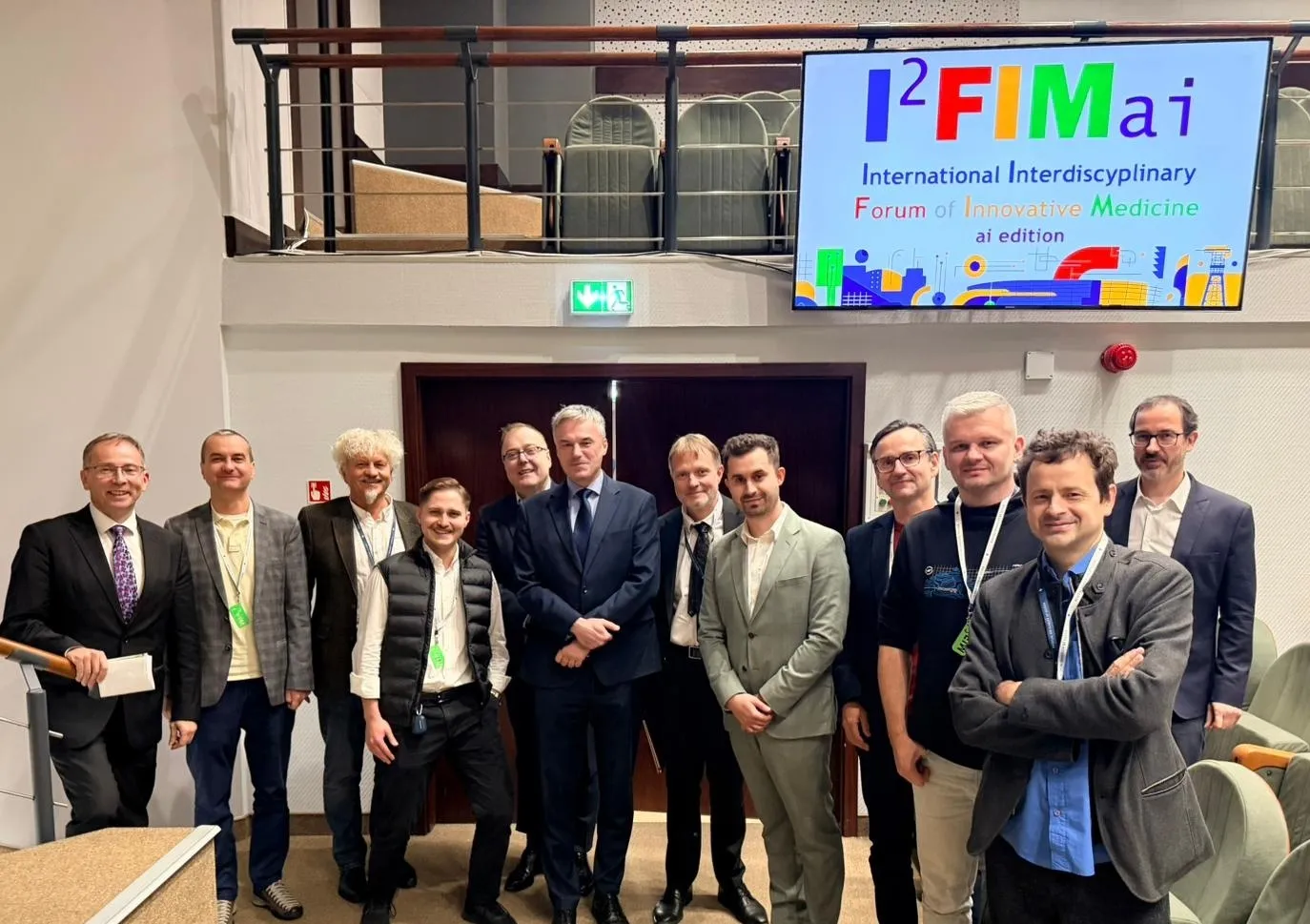
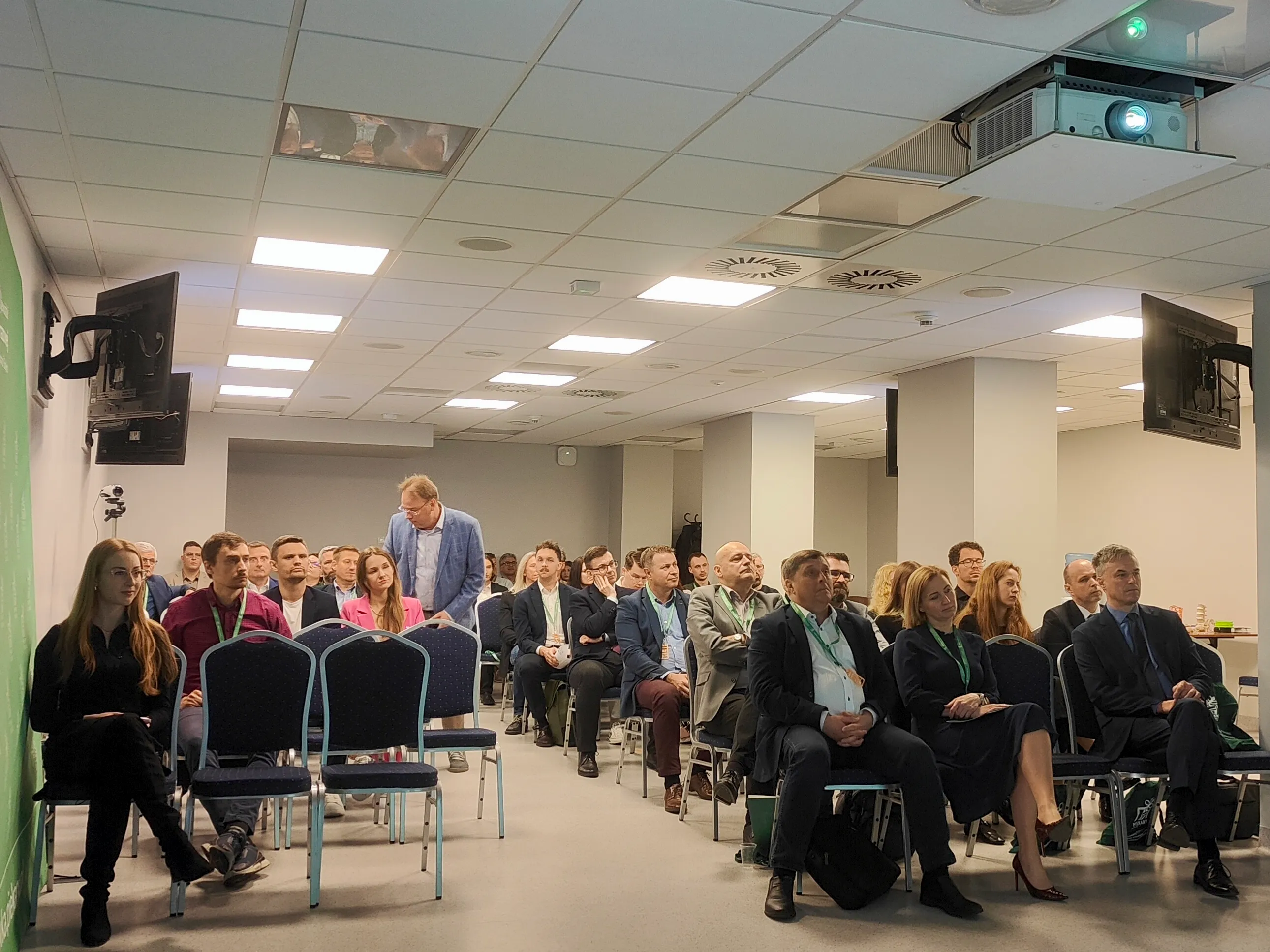
Three editions — over five hundred participants on site and online

Since the first forum in April 2025 we have met in Piekary Śląskie, Katowice and Zabrze. Summaries of all editions, session topics and patronages are collected on a separate page.

See previous editions

Registration

Sign up in a minute

Admission is free; seats in the hall are limited. After sending the form you will receive an e-mail with confirmation and directions.

  • 16 October 2026, starts at 9:00
  • Prof. Witold Zahorski Lecture Hall (Aula A3), Medical University of Silesia in Katowice
  • Certificate of attendance for everyone registered
Type of participation
Form of participation
Privacy notice (GDPR)

The data controller is the Polish Association for Artificial Intelligence in Medicine (Polskie Stowarzyszenie Sztuczna Inteligencja w Medycynie) — contact: kontakt@inteligencja.org.pl, inteligencja.org.pl.

We process the form data (full name, e-mail, position / specialty, type and form of participation) solely to organise the I2FIM ai event: registration, contact with participants and issuing certificates — on the basis of your consent (Art. 6(1)(a) GDPR). To document your consent and prevent abuse we also store the date of registration and your IP address.

We do not share the data with other parties, except the hosting and e-mail providers acting on our behalf. We keep it until 16 January 2027 (three months after the event) and then delete it.

You may withdraw your consent at any time by writing to kontakt@inteligencja.org.pl — this does not affect the lawfulness of processing carried out before withdrawal. You have the right to access, rectify, erase and port your data, to restrict its processing, and to lodge a complaint with the President of the Polish Personal Data Protection Office (UODO). Providing the data is voluntary but necessary to register.

Partners and media patrons

The forum is created together with organisations and media that follow innovation in medicine.

  • SKN ŚUM MEDTECH
  • Sano
  • BrainScan.ai
  • ISMR — International Society for Medical Robotics
  • AI LawTech
  • cowzdrowiu.pl
  • Blog OSOZ